When leaves clog your gutters, rain and melting snow back up under shingles, soak fascia boards, and spill along your foundation. Left clogged through a Chicago winter, gutters can contribute to ice dams, roof leaks, wood rot, and basement water problems that turn a simple cleaning into a costly repair.
The tricky part is that the damage often doesn’t show up right away. Gutters typically fill up in October and November, but you may not notice the consequences until March, when a ceiling stain appears or your basement starts to smell damp. By then, water may have spent months working its way into wood and other areas that were never designed to stay wet.
Our crews at Aegis Construction Group see this pattern across Chicagoland every spring. Below, we’ll break down eight types of damage clogged gutters can cause, how quickly each can develop, the warning signs you can spot yourself, and how to know whether you need a gutter cleaner, roofer, or more extensive repair.
Key Takeaways
- The late-fall cleaning matters most. Clearing gutters after the leaves drop, before the first freeze, prevents most winter damage.
- Leaf-related damage usually becomes visible within 4 to 6 months, surfacing during the March and April thaw.
- Most leaf-related damage builds over a single fall and winter, then surfaces during the spring thaw.
- Insurance typically covers sudden storm damage to gutters and roofs, but not gradual damage from long-term clogs
- Rot at the roofline, attic stains, or winter leaks mean it’s time to call a roofer, not just a gutter cleaner.
Why Clogged Gutters Cause So Much Damage
Gutters are designed to catch roof runoff and direct it to downspouts, which carry the water away from your home. When leaves pile up, that drainage path closes. Water backs up in the gutter, spills over the edge, and follows whatever path gravity gives it.
Overflow at the back edge is especially damaging. Water can run behind the gutter, soak the fascia board, and wick into the roof edge. A one-inch rainfall over just 1,000 square feet of roof produces roughly 620 gallons of water, so even a single storm can send a surprising amount of water where it doesn’t belong.
Wet leaves add weight to the gutter system while holding moisture against wood and metal for days or weeks. The combination of water overflow, added weight, and persistent dampness is what drives the different types of damage covered below.
8 Types of Damage Caused by Leaves in Gutters
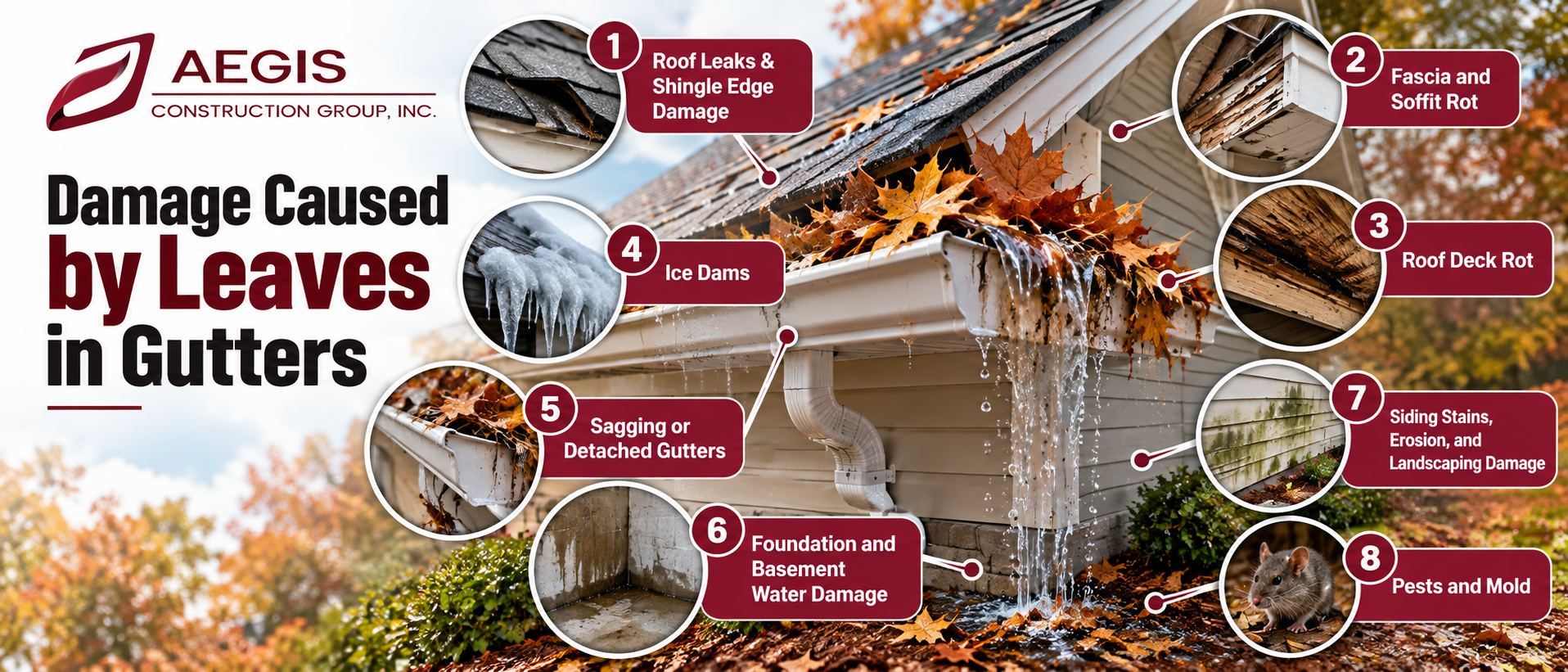
Leaf clogs can cause problems throughout your home, from the roof edge and exterior walls to the foundation and basement. Here are eight types of damage that can develop when gutters stay clogged.
1. Roof Leaks and Shingle Edge Damage
Standing water in a clogged gutter backs up under the first course of shingles. The lowest row of shingles and the drip edge sit right above the gutter. When water pools to the brim, it rises against the shingle edge and gets drawn underneath. Over time, it soaks the underlayment, rusts or lifts the drip edge, and loosens the starter strip that seals the roof’s perimeter. These leaks often start as small attic drips along an exterior wall, which makes them easy to miss until drywall stains appear.
Read: Ice and Water Shield: What It Is, How It’s Installed & Why It Matters
2. Fascia and Soffit Rot
Water that spills behind a clogged gutter soaks the fascia board and spreads rot into the soffit. Fascia is usually painted wood fastened directly behind the gutter. When overflow runs down it for weeks, paint peels, the wood softens, and gutter fasteners lose their grip. Moisture then moves into the soffit, where rot can open gaps for birds, squirrels, and insects. Aluminum fascia wrap can hide the problem, so the rot underneath often goes unnoticed until the gutter starts pulling away.
3. Roof Deck Rot
Chronic backup can rot the plywood or OSB roof deck along the eaves. This is the damage a gutter cleaner can’t see and can’t fix. Once water gets past the shingles and underlayment, it soaks the decking at the lower edge of the roof. Wet sheathing swells, delaminates, and loses its ability to hold nails. During a roof inspection, we find it as soft or spongy spots near the gutter line. Replacing rotted decking means removing shingles in that area, which is how a clog left for a few seasons becomes a partial roof repair.
4. Ice Dams
Clogged gutters give ice dams a head start by holding water that freezes at the roof edge. When snow melts higher on the roof, the water flows down to a gutter already packed with frozen leaves. It refreezes there and builds a ridge that traps more meltwater behind it. That water has nowhere to go but up and under the shingles.
Clogged gutters don’t cause ice dams on their own. Most start with heat escaping into the attic, which melts snow on the upper roof. A packed gutter gives that meltwater nowhere to go. If your home gets ice dams every winter even with clean gutters, have your attic insulation and ventilation checked.
5. Sagging or Detached Gutters
The weight of wet leaves, water, and ice can bend gutters and pull them off the house. Dry leaves are light, but a gutter full of soaked debris is heavy, and frozen debris is heavier still. Hangers bend, fasteners back out of softened fascia, and seams separate. A sagging section then holds even more water, which speeds up the failure. Once a run pulls away from the fascia, water pours straight down the wall instead of reaching the downspout.
6. Foundation and Basement Water Damage
Overflow dumps roof water right at the foundation, where it can seep into basements and crawl spaces. Downspouts exist to move water several feet away from the house. When gutters overflow, water falls in a line along the foundation instead. Much of Chicagoland sits on clay-heavy soil that drains slowly and holds water against basement walls. That saturated soil puts pressure on the wall and pushes water through cracks, joints, and window wells. Repeated cycles can widen cracks and leave basements damp and musty.
7. Siding Stains, Erosion, and Landscaping Damage
Water sheeting over a clogged gutter streaks siding and washes out the ground below. Overflow carries tannins from decaying leaves, leaving brown or black streaks on siding and trim. On wood or fiber cement, constant wetting can also cause swelling, peeling paint, and failed caulk. At ground level, falling water digs trenches in mulch beds, drowns plantings, and splashes soil back onto the siding. Erosion along the drip line can also create low spots that steer even more water toward the foundation.
8. Pests and Mold
Damp, rotting leaves create a home for mosquitoes, insects, rodents, and mold. Standing water in a clogged gutter is enough for mosquitoes to breed in warm months. Decaying debris draws carpenter ants and other wood-damaging insects, and softened fascia gives them an easy way into the structure. Birds and rodents nest in packed gutters too. Moisture that reaches the attic or wall cavities can feed mold on sheathing and insulation, bringing a musty smell and possible air quality problems.
How Long Before Clogged Gutters Cause Damage?
In the Chicago area, a clog that forms in late fall can cause visible damage by the following spring, usually within four to six months. Here’s how a typical season plays out when gutters aren’t cleaned after the leaves drop.
| Timeframe | What’s Happening | Damage Risk |
|---|---|---|
| Late fall (Oct to Nov) | Leaves pile up, first overflow | Siding stains, foundation pooling |
| Early winter (Dec) | Trapped water freezes | Gutter strain, early ice dams |
| Mid to late winter (Jan to Feb) | Freeze-thaw cycles repeat | Ice dams push water under shingles |
| Spring thaw (Mar to Apr) | Hidden damage surfaces | Ceiling stains, fascia rot, basement seepage |
A gutter that stays clogged for several seasons moves further down this list each year, from cosmetic staining toward rotted decking and foundation repairs.
Why Chicago Winters Make Clogged Gutters Worse
Chicago winters rarely stay below freezing for long. Temperatures repeatedly swing above and below 32°F between December and March, and each freeze-thaw cycle gives a clogged gutter another opportunity to cause damage.
Several factors make clogged gutters particularly troublesome during a Chicagoland winter:
- Freeze-thaw cycles: On a sunny afternoon, snow on the upper roof melts and runs toward the eaves. If the gutter is packed with leaves, the water can’t drain. It freezes overnight, and the ice buildup can grow with each cycle. Meltwater trapped behind the ice can then work its way under shingles.
- Heavy, wet snow: Gutters already loaded with soaked leaves and ice can become even heavier when snow accumulates. The added weight can bend gutter hangers, loosen fasteners, and pull gutters away from the fascia.
- Slow-draining soil: When the ground thaws, the clay-heavy soils common throughout Cook, DuPage, and surrounding counties can drain slowly. Water overflowing from clogged gutters can saturate the soil along the foundation and remain there longer.
- Chicagoland’s tree canopy: Oaks and maples can drop large volumes of leaves, while some oaks hold onto their leaves well into winter. Honey locusts, another common Chicagoland street tree, produce small leaflets that can slip through many mesh gutter guards and collect into a dense, water-holding mat.
The result is a gutter system that isn’t simply clogged, it can become a source of repeated water, ice, and weight problems throughout the winter.
Signs Leaves Have Already Damaged Your Roof or Gutters
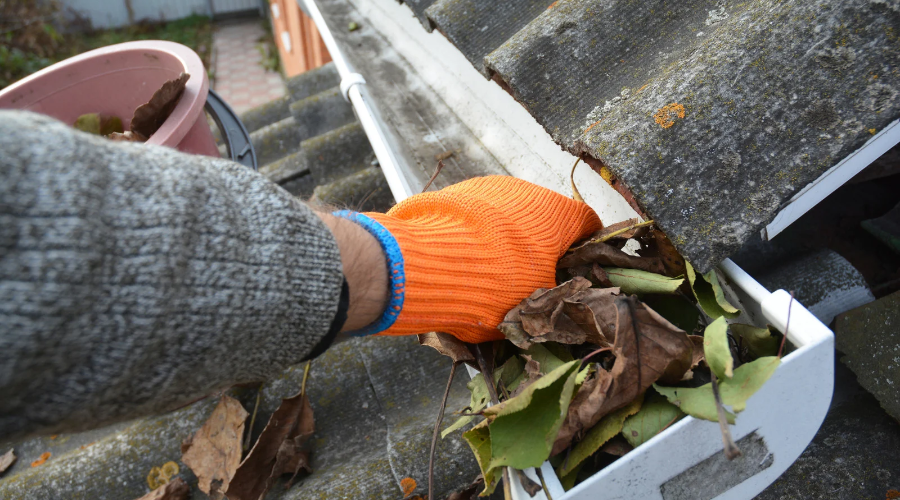
Some signs of damage are easy to spot from the ground, while others may not appear until they cause problems inside your home. Check your gutters, roofline, and interior after the leaves finish falling, then check again in early spring for signs that winter caused or worsened damage.
From the Ground
- Water spilling over the gutter edge during rain instead of draining through the downspout
- Gutter runs that sag, dip, or pull away from the fascia
- Plants, moss, or seedlings growing out of the gutter
- Shingle granules collecting at the base of the downspout
- Water pooling along the foundation or washed-out mulch beds
Inside the Home
- Water stains or dark spots on attic sheathing or rafters near exterior walls
- Ceiling spots or bubbling paint along the outer edges of upstairs rooms
- A musty smell in the attic, in closets on exterior walls, or in the basement
Seeing any of these? Schedule a roof and gutter inspection.
Does Homeowners Insurance Cover Damage from Clogged Gutters?
Whether homeowners insurance covers damage related to clogged gutters depends on what caused the damage. Most policies cover sudden, accidental events, such as a windstorm that tears gutters from the house or a falling tree limb that damages the roof. Gradual damage caused by neglect or normal wear and tear, such as fascia rot from years of water overflow, is generally not covered. Coverage for ice dam damage also varies by policy, so review your coverage carefully or ask your insurance agent.
If a storm caused the damage, Aegis can help. Our team inspects your property, documents the damage, and works with your adjuster throughout the insurance claims process.
How to Prevent Leaves from Damaging Your Gutters
Preventing gutter damage starts with one simple goal: keep water flowing freely from the roof, through the gutters and downspouts, and away from your home.
- Clean gutters at least twice a year: Plan on late fall, after most leaves have dropped, and again in spring. Homes under heavy tree cover may need three or four cleanings a year.
- Use gutter guards but know their limits: Guards cut down on large debris, but none are maintenance-free. Small leaflets, seeds, and pine needles can still get through or sit on top, so guards need periodic rinsing.
- Trim overhanging branches: Cutting back limbs over the roof reduces the leaf load and keeps branches from scraping shingles in high winds.
- Check downspouts and extensions: A clear gutter won’t help if the downspout is packed. Make sure water flows freely and that extensions discharge 4 to 6 feet from the foundation.
- Watch the pitch: Gutters should slope slightly toward each downspout. Water that sits in a flat or back-pitched run collects debris and freezes faster.
If your gutters are undersized, damaged, or overflow even when clean, replacement may be the better fix. See our gutter services to learn more.
Should You Call a Roofer or a Gutter Cleaner?
A gutter cleaner can clear debris, but damage at the roofline or inside the home calls for a roofer. Use this table to decide who to call.
| Situation | Who to Call |
|---|---|
| Gutters full, no visible damage | Exterior contractor |
| Sagging or detached gutters | Exterior contractor or roofer |
| Rot at the roofline, attic or ceiling stains | Roofer |
| Ice dams or winter leaks | Roofer |
| Two-story home or steep pitch | Professional either way (ladder safety) |
When in doubt, start with a roof inspection. A roofer checks the gutters, fascia, drip edge, and decking in one visit, so you’ll know whether a cleaning is enough or the clog has already caused more serious damage.
Get Your Roof and Gutters Checked Before Winter
The window to catch leaf-related damage is short. Once gutters freeze, problems along the roof edge become harder to spot and easier to worsen. A fall inspection gives you time to clear clogs, correct sagging gutters, and repair damaged fascia or decking before winter weather turns a small problem into a larger one.
From our offices in Villa Park and Elmhurst, Aegis Construction Group serves homeowners throughout Chicago and the suburbs with roofing, gutter, siding, and storm damage repair. We offer free roof inspections and straightforward, no-pressure recommendations, whether you need a minor repair or a complete gutter replacement.
Call (773) 812-3447 or schedule your free inspection before winter arrives.
Damage Caused by Clogged Gutters FAQs
Can clogged gutters cause roof leaks?
Yes. When gutters fill with leaves, water backs up under the lowest row of shingles and soaks the underlayment and roof deck. In winter, clogs also help ice dams form, which push meltwater under shingles. These leaks often show up first as attic stains or ceiling spots near exterior walls.
What happens if you never clean your gutters?
Over a few seasons, constant overflow rots fascia and soffits, damages the roof deck along the eaves, stains siding, and saturates the soil around your foundation. Gutters may sag or pull off the house from the weight. Neglected gutters also attract pests and can lead to basement water problems and mold.
Can leaves in gutters damage your foundation?
Yes. Clogged gutters overflow and drop roof water along the foundation instead of sending it through the downspouts. In the Chicago area, clay-heavy soil holds that water against basement walls, building pressure that pushes moisture through cracks and joints. Over time, this can lead to seepage, wider cracks, and damp basements.
How often should gutters be cleaned in Chicago?
Clean gutters at least twice a year in the Chicago area: once in late fall after most leaves drop and once in spring. Homes surrounded by oaks, maples, or honey locusts may need three or four cleanings. The late-fall cleaning matters most because it clears debris before freeze-thaw cycles begin.
Do gutter guards stop all leaf damage?
No. Gutter guards reduce the debris that gets into gutters, but none are completely maintenance-free. Small leaflets, seeds, and pine needles can slip through or build up on top, and ice can still form in winter. Guards still need periodic cleaning and inspection to keep water flowing.
Is gutter damage covered by homeowners insurance?
Sometimes. Damage from a sudden covered event, such as a windstorm or falling tree, may be covered. Damage from neglect, wear, or long-term clogs usually isn’t. Ice dam coverage varies by policy, so check yours or ask your agent. Aegis can help document storm damage and work with your adjuster.